Physical Address
304 North Cardinal St.
Dorchester Center, MA 02124
Physical Address
304 North Cardinal St.
Dorchester Center, MA 02124


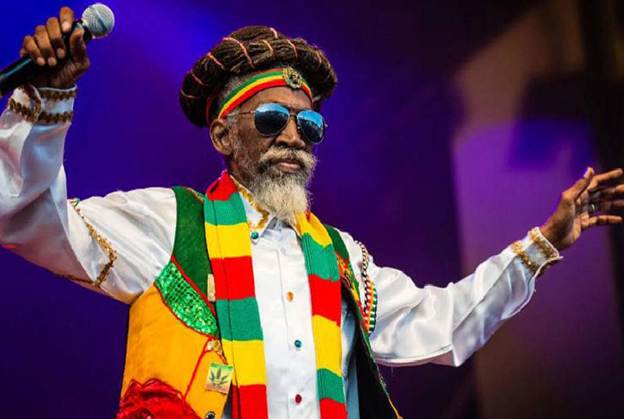
Bunny Wailer was one of the defining voices of Jamaican reggae, but his contribution to the music extends far beyond his place alongside Bob Marley and Peter Tosh in The Wailers. A singer, songwriter, percussionist and committed Rastafari, he built a solo career that reflected his spiritual convictions, his connection to Jamaican musical traditions and his determination to follow his own path.
Born Neville O’Riley Livingston on 10 April 1947, Bunny Wailer became an important figure in the development of Jamaican music, moving from the ska and rocksteady years into the international roots reggae movement. His recordings, particularly Blackheart Man, established a musical identity that remained closely connected to faith, African consciousness and cultural independence.
He died on 2 March 2021, aged 73, leaving behind a catalogue that continues to reward listeners exploring reggae beyond its most familiar names.
Bunny Wailer was born in Kingston, Jamaica, and spent much of his early childhood in Nine Mile, St Ann. It was there that he developed a close friendship with Bob Marley. Their families later became connected when Bunny’s father, Thaddeus Livingston, and Marley’s mother, Cedella Booker, had a daughter together.
As the boys grew older, their shared interest in music brought them towards Kingston, where opportunities to perform and record were beginning to emerge. Alongside Peter Tosh, they became part of the young Jamaican music scene that was developing rapidly in the early 1960s.
The group that became The Wailers emerged in 1963. Jamaica’s popular music was changing, with ska giving way to rocksteady before the development of reggae. The trio grew alongside those changes, learning to work within different rhythms, recording environments and production styles.
Their early work helped establish the vocal harmonies and songwriting traditions that would become central to their identity. Bunny’s voice was an essential part of that sound, even as the group’s international profile increasingly became associated with Marley.
The Wailers’ early recordings were built around a collective musical identity. Although Marley and Tosh often received more attention as lead vocalists and songwriters, Bunny contributed vocals, songwriting and percussion that helped shape the group’s distinctive character.
One of his signature recordings was “Dreamland,” a version of “My Dream Island,” originally recorded by El Tempos. Bunny’s interpretation gave the song a lasting place in his repertoire. His performances on songs such as “Riding High,” “Brainwashing” and “Keep On Moving” also demonstrate his role in the group’s development.
He recorded the original version of “Pass It On” in 1971, a song that would remain associated with his musical history.
The Wailers’ international breakthrough gathered momentum with the release of Catch a Fire and Burnin’ in 1973. These albums introduced the group’s music to a wider audience, helping establish reggae as a major presence beyond Jamaica.
However, international success also brought changes to the group’s direction and working arrangements. Bunny and Tosh increasingly found themselves less central as attention concentrated on Marley and the demands of overseas promotion grew.
For Bunny, the issue was not simply musical opportunity. His spiritual commitments and reluctance to spend extended periods touring outside Jamaica influenced his decision to leave the group in 1973. Tosh also departed to develop his solo career, while the I Threes later became a key part of Marley’s touring and recording lineup.
Released in 1976, Blackheart Man is widely regarded as a landmark in Bunny Wailer’s solo career. Rather than relying on the international fame of The Wailers, the album presented his own artistic priorities, bringing spiritual reflection, roots reggae and social consciousness together in a deeply personal statement.
Its importance lies in the way the music reflects Bunny’s understanding of Rastafari. His faith was not simply a subject for occasional lyrics; it informed his worldview, his choices and the direction of his recordings.
The album’s roots-oriented sound also placed him firmly within a Jamaican tradition that treated reggae as more than entertainment. Songs could carry messages about identity, injustice, spirituality and the relationship between individuals and society.
For listeners who know Bunny Wailer mainly through his association with Marley, Blackheart Man offers a different entry point. It reveals an artist with his own musical language and a clear sense of purpose.
The record remains a useful starting point for anyone exploring the spiritual and cultural dimensions of roots reggae.
Bunny Wailer’s Rastafari faith was central to his life and artistic identity. His recordings frequently engaged with spiritual consciousness, African identity and the social concerns that shaped roots reggae during the 1970s and beyond.
His approach also distinguished him from the commercial expectations surrounding internationally successful Jamaican artists. He was often reluctant to tour extensively, preferring to maintain a closer connection to Jamaica and the principles that informed his work.
That commitment did not prevent him from exploring different musical approaches. His catalogue includes recordings that revisit earlier Wailers material, as well as productions that move towards more contemporary reggae sounds.
His version of “Dreamland” remains an accessible introduction to his voice, while Blackheart Man provides a deeper understanding of the ideas behind his music.
These recordings reveal an artist whose career cannot be reduced to a single style or era. Bunny’s work developed over decades, but the connection between music, identity and spiritual conviction remained a defining thread.
Although Bunny Wailer is closely associated with conscious roots reggae, his musical range was broader than that label might suggest.
His 1981 album Rock ‘n’ Groove demonstrated a more upbeat direction, incorporating the rhythmic approach associated with the Jamaican production and session-musician tradition. Sly Dunbar and Robbie Shakespeare, the celebrated rhythm section known as Sly & Robbie, were among the important musicians associated with the wider sound of Jamaican reggae during this period.
Bunny also revisited material from The Wailers catalogue. Sings the Wailers offered listeners another opportunity to hear familiar songs through his individual interpretation, supported by experienced Jamaican musicians.
These projects demonstrate that preserving tradition does not require an artist to repeat the same formula indefinitely. Bunny could honour his musical beginnings while adapting his sound to different audiences and changing production styles.
Bunny Wailer’s achievements received international recognition, including three Grammy Awards.
According to the Recording Academy’s published records, his wins came in 1991, 1995 and 1997. The awards were associated with Time Will Tell – A Tribute to Bob Marley, Crucial! Roots Classics and Hall of Fame – A Tribute to Bob Marley’s 50th Anniversary, respectively.
His recognition also extended beyond the recording industry. The Jamaican government conferred the Order of Jamaica on him in 2012 and the Order of Merit in 2017, acknowledging his contribution to the country’s cultural life.
These honours reflected a career that connected local musical traditions with international audiences. Bunny’s significance was not limited to commercial achievement: he helped carry the sound and cultural expression of Jamaica across generations.
Bunny Wailer died on 2 March 2021. His passing marked the loss of the last surviving member of The Wailers’ celebrated original trio of Bunny Wailer, Bob Marley and Peter Tosh.
Yet his legacy remains distinct from those of his former bandmates. Marley became reggae’s most widely recognised global figure, and Tosh established his own powerful solo identity. Bunny followed a path that placed particular emphasis on spiritual independence, Jamaican roots and the relationship between music and Rastafari.
His recordings continue to offer more than nostalgia for an earlier period of reggae. They provide a window into the ideas, rhythms and cultural commitments that shaped the genre as it developed from a local Jamaican sound into a global musical force.
For new listeners, Blackheart Man is an ideal place to begin. For longtime fans, revisiting his recordings reveals the depth of an artist who helped build The Wailers’ foundation before establishing a legacy entirely his own.
Bunny Wailer was not simply one of the original Wailers. He was a defining reggae artist in his own right, whose music carried Jamaica’s cultural and spiritual traditions far beyond the island.