Physical Address
304 North Cardinal St.
Dorchester Center, MA 02124
Physical Address
304 North Cardinal St.
Dorchester Center, MA 02124
There was a time when reggae and dancehall fans could barely keep up with the flood of one-riddim albums. Throughout the 2000s, Greensleeves Records’ Rhythm Album series and VP Records’ Riddim Driven releases helped turn juggling compilations into a defining feature of the era, with hundreds of projects emerging from major labels, independent producers and smaller Jamaican imprints. Some became enduring classics; others disappeared almost as quickly as they arrived. By the end of the decade, the frenzy had begun to fade.
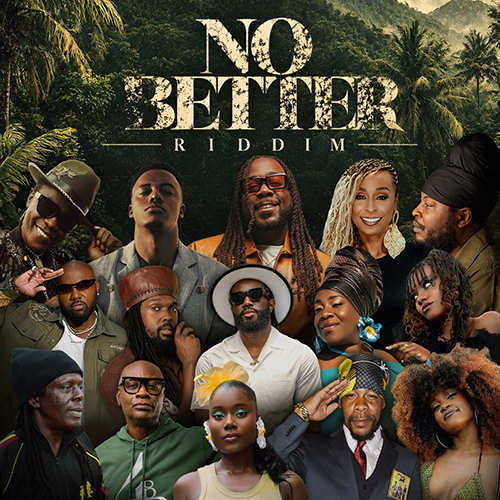
Damian “Jr. Gong” Marley is revisiting that tradition with No Better Riddim , released digitally through Ghetto Youths International on October 16, 2026. The 16-track collection brings 15 vocal performances together on one musical foundation, closing with Damian’s instrumental version. Several tracks arrived as singles ahead of the full release, but hearing them together reveals more clearly how the different artists interpret the same riddim.
A Tradition With Deep Jamaican Roots
The one-riddim format was well established long before the compilation boom of the 2000s. In 1974, singer and producer Rupie Edwards released Yamaha Skank , built around the backing track associated with The Uniques’ “My Conversation.” The project helped demonstrate the creative possibilities of building a collection around a shared musical foundation.
The principle remains straightforward: give several artists the same riddim and let each bring a different voice, melody and lyrical perspective. In Jamaican music, that approach has allowed producers to create entire musical conversations from a single instrumental, with artists exploring everything from romance and heartbreak to faith, social conditions and personal identity.
With No Better Riddim , Damian Marley works within that familiar framework rather than trying to reinvent it. The interest lies in the performers’ contrasting approaches and the way the collection moves between lovers rock and conscious roots reggae.
A Strong Lineup With Different Perspectives
The compilation brings together established voices, including Romain Virgo, Richie Spice, Pressure Busspipe, Turbulence and Queen Omega, alongside artists such as Jemere Morgan, MediSun and Zaila Jazz. Their different styles give the project variety, even though the musical foundation remains consistent.
Jemere Morgan’s “Know Better” opens the collection and establishes its melodic direction. From there, the early tracks lean heavily towards love and relationships, a natural fit for the warmth of the riddim.
Romain Virgo’s “Lay My Head” is one of the standout selections, with the singer bringing his familiar melodic touch to a song that has already attracted attention as a single. Pressure Busspipe’s “So Amazing” is another appealing entry, while Turbulence explores romantic connection on “Twin Flames.”
Queen Omega takes a more reflective approach on “Should Have Known Better.” Her contribution brings a sense of regret and emotional consequence to the collection, adding depth to a sequence otherwise dominated by the pleasures and complications of romance.
From Romance to Roots and Spirituality
As the album progresses, its lyrical focus broadens. The romantic themes give way to songs concerned with faith, spirituality and the challenges of everyday life.
Chino McGregor’s “Jah Will Be There” and MediSun’s “Rastafari Love” are particularly worthwhile stops along the way. Both bring spiritual concerns into a project that could easily have remained focused on lovers rock. Their presence helps expand the album’s emotional range and reinforces the versatility of the juggling format.
Damian Marley closes the collection with “No Better Riddim (Version),” stripping away the vocals and leaving the instrumental to speak for itself. It is a fitting conclusion, offering listeners an opportunity to focus on the production that connects all 15 vocal tracks.
Does the Riddim Hold Up Across 16 Tracks?
The central challenge with any juggling compilation is repetition. When so many artists work over the same instrumental, the experience can become predictable unless the vocal performances and songwriting provide enough contrast.
No Better Riddim is not entirely immune to that limitation. Sixteen tracks built around one musical foundation ask a lot of the listener, and not every song leaves the same impression. However, the movement between romantic material and more spiritually minded songs helps maintain interest. The contrasting vocal styles also prevent the collection from feeling completely uniform.
The album’s appeal is therefore less about dramatic musical reinvention and more about how successfully the individual artists make the riddim their own. Some tracks will naturally connect more strongly than others, but the range of interpretations gives listeners several reasons to return.
A Welcome Return to the Juggling Tradition
No Better Riddim does not attempt to recreate the one-riddim album boom of the 2000s, nor does it need to. Its strength lies in the combination of established reggae voices, emerging talent and a production that accommodates both romantic and conscious material.
For listeners who remember the era when juggling compilations regularly filled record-shop shelves and sound-system playlists, Damian Marley’s project offers a welcome reminder of what made the format so effective. For newer fans, it provides a compact introduction to a distinctly Jamaican approach to musical collaboration.
The riddim remains the common thread, but the artists give it different meanings. That is the enduring appeal of the format, and No Better Riddim makes a solid case for keeping the tradition alive.
Release Information